
Frequently Asked Questions
This course is open to beginners, regular yoga practitioners, and aspiring yoga teachers. No prior teaching experience is required. A sincere interest in yoga and personal growth is sufficient.
Yes. The certification is recognized by Yoga Alliance International (India), World Yoga Federation (USA), and is ISO certified. The training is aligned with the Yoga Certification Board (YCB), Ministry of AYUSH, Government of India.
Yes. Upon successful completion, you will be certified as a 200-Hour Yoga Teacher and will be eligible to teach yoga globally in studios, gyms, wellness centres, schools, corporates, and private sessions.
The 200-Hour TTC builds a strong foundation in yoga practice, philosophy, anatomy, and teaching methodology.
The 300-Hour TTC is an advanced program focused on Yoga Therapy and disease-specific applications. Together, they lead to a 500-Hour Yoga Teacher Training Certification.
The course is conducted in both Hindi and English, making it accessible to a wider range of students.
The course duration is 4 months.
- Practical classes are held in the morning
- Theory sessions are conducted on weekends
Exact schedules are shared at the time of enrolment.
Yes. Students must appear for theory and practical assessments to successfully complete the course and receive certification.
Yes. Selected and eligible students may receive an opportunity for a 6-month internship to gain practical teaching experience under guidance.
Absolutely. The 200-Hour TTC is the mandatory foundation for enrolling in the 300-Hour Yoga Therapy Teacher Training Course, leading to the 500-Hour Yoga TTC.
Yes. Many students join the course for self-transformation, discipline, mental clarity, and yogic lifestyle development, even if they do not plan to teach immediately.
200 Hours Yoga Teacher Training Course
Learn Yoga. Experience Yoga. Understand Yoga. Become a Teacher.
4-Month Comprehensive Yoga Teacher Training • 200 Hours • Online + Offline / Hybrid
Our aim is not to produce certificate holders.
Our aim is to develop capable, confident and responsible Yoga teachers.
A Transformational, Experiential Yoga Teacher Training
The 200-Hour Yoga Teacher Training Course at Anandabodh Institute of Yoga is designed for sincere seekers, regular practitioners and aspiring Yoga teachers who wish to understand Yoga beyond the physical postures.
This is not simply a course for completing a syllabus or obtaining a certificate. It is a progressive learning journey in which students practise Yoga regularly, study its philosophy and science, understand the purpose behind each practice, learn how to observe and guide others, and gradually develop the clarity, confidence and competence required to teach Yoga.
The course combines daily practical immersion with weekend academic learning, creating a continuous bridge between personal practice, understanding and teaching.
Why Anandabodh 200-Hour TTC Is Different
- Four months of sustained learning instead of a short intensive certification programme
- Regular morning practical immersion with the master teacher
- Weekend sessions that refine practice and build theory and teaching skills
- Progressive study of Yoga philosophy and classical texts
- Deep exposure to Asana, Pranayama, Mantra, Mudra, Bandha and Shatkarma
- Progressive Yoga Nidra and meditation training
- Applied Anatomy and Physiology
- Yogic lifestyle and nutrition
- Teaching methodology, sequencing, communication and corrections
- Practice teaching during the course itself
- Regular observation, feedback, revision and refinement
The Anandabodh Learning Cycle
Practise -> Understand -> Experience -> Teach -> Receive Feedback -> Refine
Course Details
- Duration: 4 Months
- Training: 200 Hours
- Practical Classes: Monday–Saturday mornings
- Theory & Teaching Methodology: Weekend sessions
- Mode: Online + Offline / Hybrid
- Language: Hindi & English
- Assessment: Theory + Practical + Teaching
- Certification: Yoga Teacher Certification from Anandabodh Institute of Yoga
- Course Fee: INR 51,000
A Four-Month Experiential Journey
The programme follows a unique combination of daily practical immersion and weekend academic and teaching development.
Monday to Saturday — Morning Practical Training
Participants become part of Anandabodh's regular morning Yoga programme, approximately 90 minutes a day, six days a week.
Monday • Wednesday • Friday — Healing & Empowering Yoga
- Asana
- Pranayama
- Mantra
- Mudra
- Bandha
- Awareness
- Relaxation
The emphasis is not merely on performing postures but on understanding how and why a practice is performed.
Tuesday • Thursday • Saturday — Quantum Meditation Practices
- Preparatory asana and pranayama
- Pratyahara
- Relaxation
- Yoga Nidra
- Concentration
- Meditation and deeper awareness practices
These sessions gradually move from physical preparation towards internal practices.
Weekend Learning & Teaching Development
- Yoga philosophy and classical texts
- Anatomy and physiology
- Yogic lifestyle and nutrition
- Teaching methodology
- Sequencing and class planning
- Demonstration and verbal cueing
- Observation and correction
- Teaching ethics and professional conduct
- Practice teaching
- Discussion, revision and assessment
Theory and practice are deliberately connected.
What you practise in the morning ? what you understand in theory ? what you learn to teach.
Course Curriculum
1. Foundations of Yoga
- Meaning, definition, history and evolution of Yoga
- Yoga as a way of life
- Aim and objectives of Yoga
- Major schools and traditions
- Hatha, Raja, Jnana, Bhakti and Karma Yoga
- Shad Darshana — Six Classical Systems
- Karma and law of cause and effect
- Four Purusharthas and Four Ashramas
- SWAN Principle
- Pancha Mahabhuta
- Three Doshas
- Introduction to the three Gunas
2. Classical Texts — Bhagavad Gita
- Selected teachings and verses relevant to Yoga, action, balance, meditation and life
- Selected verses from Chapter II, including 47, 48, 49, 50, 51 and 70
- Chapter VI — 17
- Understanding and application rather than memorisation
3. Patanjali Yoga Sutras
- Selected study of approximately 40 important Sutras from the 196 Sutras
- Samadhi Pada: selected foundational Sutras including I.1–I.14 and I.33
- Sadhana Pada: selected teachings on Kleshas, Asana, Pranayama and Pratyahara, including II.3–II.11 and II.46–II.55
- Vibhuti Pada: selected teachings on Dharana, Dhyana, Samadhi and Samyama, including III.1–III.6
- Relating classical teachings to personal practice and contemporary life
4. Hatha Yoga & Asana
- Purpose and principles of Asana
- Progressive levels: beginner to advanced
- Preparation, execution, awareness and relaxation
- Standing, sitting, forward bending, backward bending, twisting and balancing practices
- Inverted practices
- Selected advanced Asanas
- Sirsasana — preparation, practice, benefits and precautions
- Eye exercises and yogic eye practices
- Surya Namaskar, breathing coordination and mantras
- Sequencing, modifications, benefits and contraindications
- Observation, corrections and safe practice
5. Pranayama & Pranic Awareness
- Meaning and purpose of Pranayama
- Understanding Prana
- Five major Pranas and Sub-Pranas
- Relationship between breath, Prana, mind and consciousness
- Preparatory breathing practices
- Classical Pranayama practices
- Progressive levels of practice
- Benefits, precautions and contraindications
- Teaching Pranayama safely
6. Mudra, Bandha & Shatkarma
- Meaning and application of important Mudras
- Moola, Uddiyana and Jalandhara Bandhas
- Maha Bandha
- Agnisar Kriya
- Jala Neti
- Kunjal
- Shankhaprakshalana
- Trataka
- Nauli
- Kapalabhati
- Principles, benefits, precautions and responsible application
7. Mantra, Chakras & Subtle Yoga
- Introduction to Chakra system
- Locations, characteristics, symbols and elements
- Bija Mantras
- Mantra Yoga
- Significance and methods of chanting
- Relationship between mantra, breath, attention and awareness
- Introduction to subtle dimensions of Yoga
8. Yoga Nidra, Relaxation & Meditation
- Meaning and purpose of Yoga Nidra
- Stages of Yoga Nidra and Sankalpa
- Rotation of consciousness and progressive internalisation
- Kaya Sthairyam
- Antar Mouna — progressive stages
- Ajapa Japa / So-Ham Meditation — preliminary, intermediate and advanced levels
- Pranav Dhyana
- Chidakash Dharana
- Chakra Meditation
- Nada Brahma Meditation
- Breath-awareness and concentration practices
- Witnessing consciousness
- Pratyahara ? Dharana ? Dhyana ? Samadhi
- Different approaches to meditation and their application
9. Anatomy & Physiology
- Skeletal system
- Muscular system
- Nervous system
- Respiratory system
- Cardiovascular system
- Digestive system
- Endocrine system
- Reproductive system
- Excretory system
- Basic movement and functional understanding
- Applied effects of Yoga practices on body systems
- Practical anatomy relevant to teaching and corrections
10. Yogic Diet, Nutrition & Lifestyle
- Yogic concept of food
- Ayurvedic concept of food
- Food according to individual constitution and needs
- Three Gunas and food
- Six tastes
- Balanced diet
- Ideal food schedule
- Fasting — principles, purpose and precautions
- Food, digestion, energy and mental clarity
- Sleep and daily routine
- Stress and modern living
- Holistic yogic lifestyle
11. Teaching Methodology & Professional Development
- Role and responsibility of a Yoga teacher
- Teacher versus Guru
- Qualities of an effective teacher
- Ethics and professional conduct
- Compassion, patience and sensitivity
- Demonstration of Asana
- Clear verbal instructions
- Voice, language and communication
- Observation of students
- Identifying mistakes
- Corrections, assistance and adjustments
- Teaching beginners and mixed-level groups
- Group and one-to-one teaching
- Online Yoga teaching
- Class planning and sequencing
- Warm-up, peak practice, counterposes and relaxation
- Time management and integration of Pranayama and meditation
12. Teaching Laboratory — From Student to Teacher
- Demonstrate practices to peers
- Explain selected Asanas
- Give verbal instructions
- Practise corrections
- Lead short sequences
- Lead selected Pranayama
- Introduce relaxation
- Guide selected meditation
- Design short Yoga sessions
- Receive feedback from teachers and peers
- Refine and repeat teaching
Progressive pathway: Observe -> Demonstrate -> Explain -> Teach -> Receive Feedback ? Improve
13. Integration & Personal Practice
- Personal Sadhana
- Consistency and discipline
- Self-observation
- Awareness and reflection
- Developing a personal practice
- Understanding personal strengths and areas for improvement
- Designing appropriate practices and understanding why each component is chosen
Teaching Practicum — Becoming a Teacher During the Course
One of the distinctive features of the Anandabodh programme is that participants do not wait until the end of the course to discover whether they can teach.
Teaching is progressively introduced during the training itself.
- Observe
- Understand
- Demonstrate
- Explain
- Guide
- Teach
- Receive Feedback
- Improve
- Teach Again
Participants gradually learn to conduct portions of classes, explain practices, sequence sessions, guide breathing and meditation practices, observe fellow students and respond to common teaching situations.
The goal is practical confidence.
Students should finish the course with not only knowledge of Yoga, but with the beginning of real teaching ability.
Assessment & Certification
Assessment is not limited to a final written examination. Participants are assessed progressively through practice, participation, demonstrations, teaching assignments, feedback and improvement.
Paper I
Yoga Philosophy, Principles & Yoga Techniques — 100 Marks
Paper II
Anatomy, Physiology, Diet, Nutrition & Teaching Methodology — 100 Marks
Paper III
Demonstration of Asana, Pranayama, Mudra, Bandha and other Yoga techniques — 50 Marks
Practical Knowledge
Anatomy, Physiology & Teaching Methodology — 50 Marks
Successful participants receive the Yoga Teacher Certification from Anandabodh Institute of Yoga, subject to completion of programme requirements.
Certification & Professional Pathway
Upon successful completion of the programme, participants receive the Yoga Teacher Certification from Anandabodh Institute of Yoga, recognized by:
- Yoga Alliance International India
- World Yoga Federation, USA
- ISO-certified Yoga Certification
The programme also prepares participants for the Yoga Certification Board (YCB) examination under the AYUSH Department, Government of India.
This recognition enhances global teaching opportunities and credibility in the field of Yoga teaching as a profession.
Build the Foundation. Progress to Higher Certification.
Anandabodh 200 Hours -> Teaching Experience -> Advanced Training -> Higher Professional Certification
YCB certification is a separate examination/certification pathway. Completion of this Anandabodh programme does not itself constitute YCB certification; candidates must fulfil the applicable YCB requirements and successfully clear the relevant examination.
The YCB Professional Pathway
The Yoga Certification Board (YCB), under the Ministry of AYUSH, provides professional certification pathways including:
- Level 1 — Yoga Protocol Instructor
- Level 2 — Yoga Wellness Instructor
- Level 3 — Yoga Teacher & Evaluator
The Anandabodh 200-Hour TTC provides a strong foundational base for participants who wish to continue building the training, experience and competencies required for higher professional certification pathways.
The 200-hour programme is therefore not presented as the end of the journey, but as a strong and structured beginning.
Internship & Further Development
After successful completion of the final assessment, selected students may be offered an opportunity for a 6-months to 1 year internship to gain further hands-on teaching experience.
The 200-Hour programme also provides a foundation for progressing into advanced Yoga and Yoga Therapy education, including the Anandabodh 300-Hour Therapy Yoga Teacher Training pathway.
Who Can Join?
- Beginners with a sincere interest in Yoga
- Regular Yoga practitioners
- Aspiring Yoga teachers
- Wellness professionals
- Individuals seeking deeper understanding of Yoga
- People interested in personal transformation
- Those wishing to teach Yoga professionally
- Practitioners who want to progress towards advanced Yoga Therapy education
No previous teaching experience is required. What is required is sincerity, regularity and willingness to learn.
What Will You Be Able to Do After the Course?
- Understand the fundamental philosophy of Yoga
- Practise a wide range of yogic techniques
- Explain the principles behind practices
- Design basic Yoga sessions
- Demonstrate and teach selected practices
- Observe and provide basic corrections
- Conduct structured Yoga classes
- Guide basic relaxation and meditation practices
- Communicate with greater clarity and confidence
- Build a foundation for further advanced Yoga and Yoga Therapy education
- Continue developing towards professional Yoga certification pathways
The goal is not simply: “I have completed 200 hours.”
The goal is: “I understand what I am teaching, I have experienced what I am teaching, and I have begun learning how to teach it responsibly.”
Why Choose Anandabodh?
Because Yoga is more than a posture.
At Anandabodh, we believe authentic Yoga education should help a student:
Practise deeply • Understand clearly • Live consciously • Teach responsibly • Serve meaningfully
A lifelong journey in Yoga
The 200-Hour TTC is therefore not designed merely as a certificate-producing programme. It is designed as a foundation for a lifelong journey in Yoga.
HEAL • GROW • LEARN • TEACH • SERVE
Join the Anandabodh 200-Hour Yoga Teacher Training Course and develop the understanding, confidence and practical skills to teach Yoga with clarity, authenticity and purpose.ne
A Gentle first Step
-
01
Swara Clock
Which nostril leads your breath right now, with the next changes today.
-
02
Nadi Shodhana Pacer
A visual and sound guide for alternate nostril breathing ratios.
-
03
Swara Balance Check
For Swara Yoga practice: find your dominant nostril through the day.
-
04
Breath Rate Experiment
Explore your breathing rate through a simple guided experiment.
-
05
Live Beyond Age Journal
A journal to support reflection and conscious living as part of the Live Beyond Age journey.
-
09
Tridosha Check
Your Ayurvedic constitution and how you are right now.
Track your hours and syllabus
-
01
Morning Class Attendance
For authorized students and participants to record class attendance.
-
02
TTC Companion
For students of our teacher training courses: hours, syllabus and exam preparation.
Courses Certified By:


What People Say About Us
This Yoga Teacher Training Course goes far beyond just teaching asanas or theory—it’s a complete transformation program designed to embody the true spirit of yoga. It encourages you to adopt yoga as a lifestyle, not just a practice. The curriculum covers not only physical postures, pranayama, and meditation, but also the philosophy, ethics, discipline, and mindful living that yoga stands for.
The batch size is intentionally small, ensuring each student receives personalized attention. Whether you're a fast learner or someone who needs more time, everyone gets equal guidance. There’s no favoritism—just honest, consistent support for growth.
Led by Shivachittam Sir, the course is taught with rare dedication. His teaching style blends deep wisdom with practical tools. He uses regular quizzes, interactive sessions, and hands-on guidance to make sure every student not only follows instructions but truly understands yoga.
The TTC is more than a certification program—it’s a life school that builds a solid foundation in yoga practice, philosophy, and personal development.
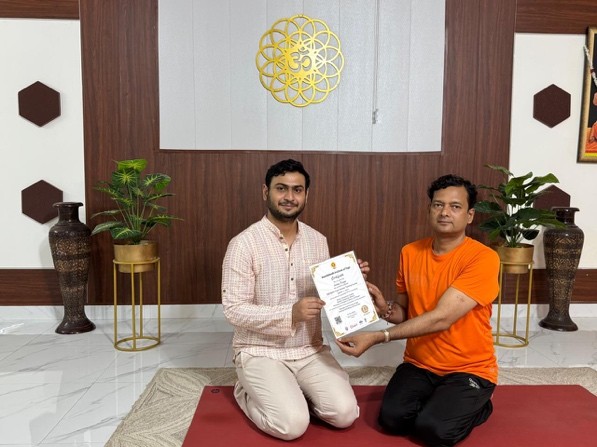
Sachin Pargai (Delhi)
When I talk about Yoga Teacher Training Program, I must say, I am very thankful and very grateful to the founder of Anandabodh, the mentor, the guru, Shivachittamji, for making this program possible. The most beautiful thing I felt Yoga has flexibility. Yoga is all about bringing flexibility in the body. They made TTC also so flexible that while maintaining discipline in such a beautiful way, where I always thought I had a strong desire to know the deeper aspects of yoga from the beginning, but can you get a flexible mentor? With utter discipline and commitment, he made me do it with such a beautiful flexibility. It was fun. Hats off to the kind of system he has created. I think this is his own practice on the journey of yoga. He has completely dedicated himself. And in that whole journey, I am very thankful to them for this beautiful journey. I must say if you are on the path of yoga, and if you are doing yoga, even if you don't want to become a teacher, or a professional, but yoga TTC will change a lot of things for you. Some things we do for our life. You must go for it. It is a super fantastic program.
Thank you very much. Hari Om! Pranaam.
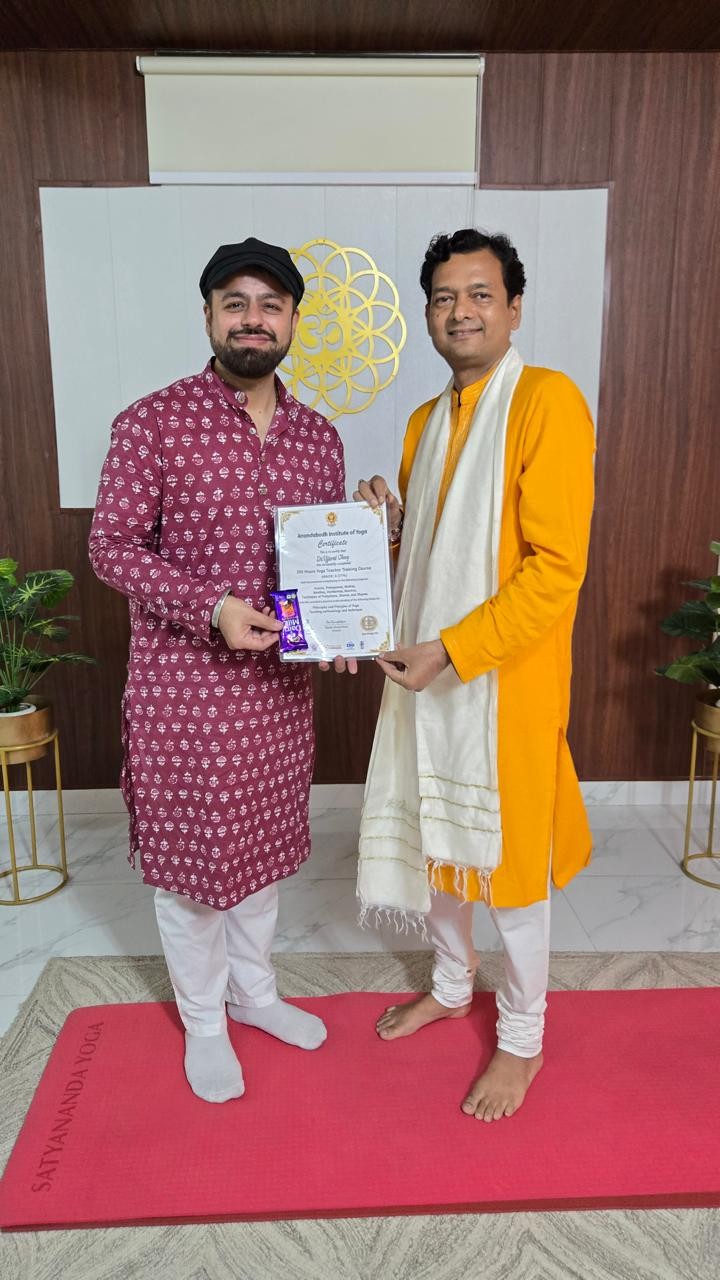
Dr. Ujjwal Chug (Delhi)
मेरा टीचर ट्रेनिंग कोर्स का अनुभव बहुत सकारात्मक और ज्ञानवर्धक रहा। इस कोर्स ने मुझे योग जीवन के सिद्धांतों और तकनीकों को गहराई से समझने में मदद की और मुझे अपने शिक्षण कौशल को विकसित करने में मदद मिली। इस कोर्स के दौरान दर्शन, योगासन, प्राणायाम, उनकी तकनीकों के बारे में समझा और हमारे प्रशिक्षक बहुत ही अनुभवी और सहानुभूति थे। जिन्होंने हमें इस कोर्स के दौरान सभी योग तकनीकों और ध्यान, साधना पर ध्यान करना, प्राणायाम, मुद्रा आदि के बारे में विस्तार से समझाया और बताया। हमें अपने साथियों के साथ अनुभव साझा करने का मौका मिला और एक मंच से सिखाने का मौका मिला। मैं इस कोर्स की अत्यधिक अनुशंसा करती हूँ।
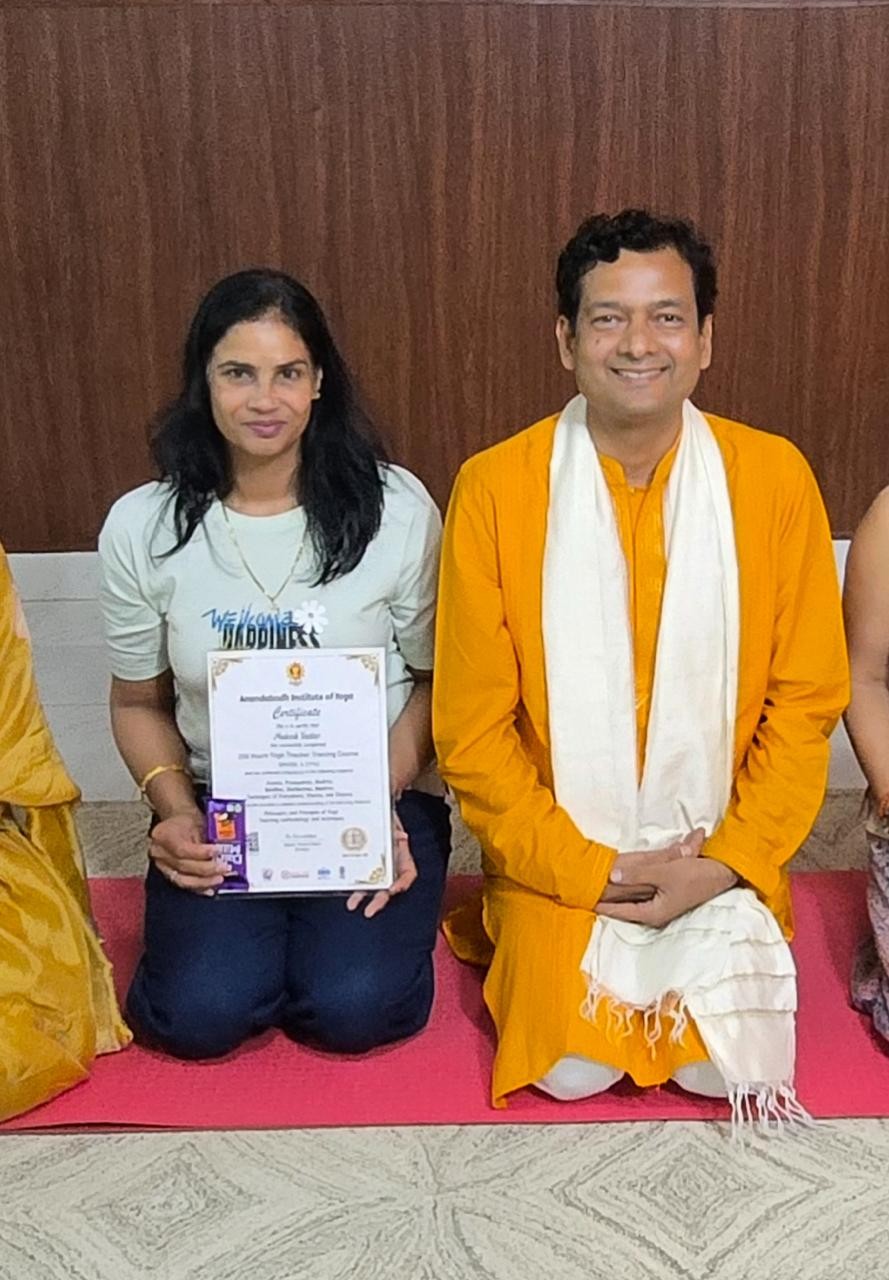
Mukesh Yadav (Gurgaon)
My journey through the yoga teacher training program has been nothing short of transformative. Initially, I joined with the intention of learning how to help others, but I soon discovered that the greatest gift of this training was the profound impact it had on my own life.
Self-Discovery and Harmony
Through this training, I came to realize that our first responsibility is to cultivate harmony within ourselves. Only when we are compassionate towards ourselves can we truly extend compassion to others. This journey has been a journey of self-discovery, and I am grateful for the profound lessons I've learned.
The Art of Yoga Teaching
I was amazed by the depth and complexity of yoga teaching. The training revealed the immense effort and dedication required to master each technique, understand the scientific reasoning behind each practice, and create customized practices tailored to individual needs. Witnessing the positive impact of yoga on my loved one's health was a testament to the power of this ancient practice.
Comprehensive Practice
The training covered a wide range of topics, including:
- Shatkarma: A comprehensive practice of purification and cleansing of the body, which helped me understand the importance of detoxification and inner cleansing.
- Diet and Nutrition: I learned about the importance of a balanced diet and how it can impact our overall well-being.
- Sleep Improvement: The training taught me techniques to improve my sleep quality, which has had a significant impact on my physical and mental health.
A Holistic Approach to Life
My biggest realization has been that yoga is not just a physical practice but a way of life. I believe that embracing yoga can bring harmony to our inner and outer worlds, and it's essential for our youth to adopt this holistic approach. The 4-month training was rigorous, with 36 sessions and 265 hours of theory, covering various branches of yoga, including Hatha, Kundalini, Yoga Nidra, Raja, Karma, and Bhakti Yoga.
Gratitude and Blessings
I feel fortunate to have had the opportunity to practice under the guidance of Swami Niranjan Das and experience his divine presence. Shivachittam ji is an exemplary role model for anyone seeking to embody yoga as a way of life. I am grateful for his guidance and the opportunity to embark on this journey. Hari Om.
I highly recommend this yoga teacher training program to anyone seeking a holistic understanding of yoga and its applications. The training offers a comprehensive and transformative experience that can benefit individuals in all aspects of their lives.
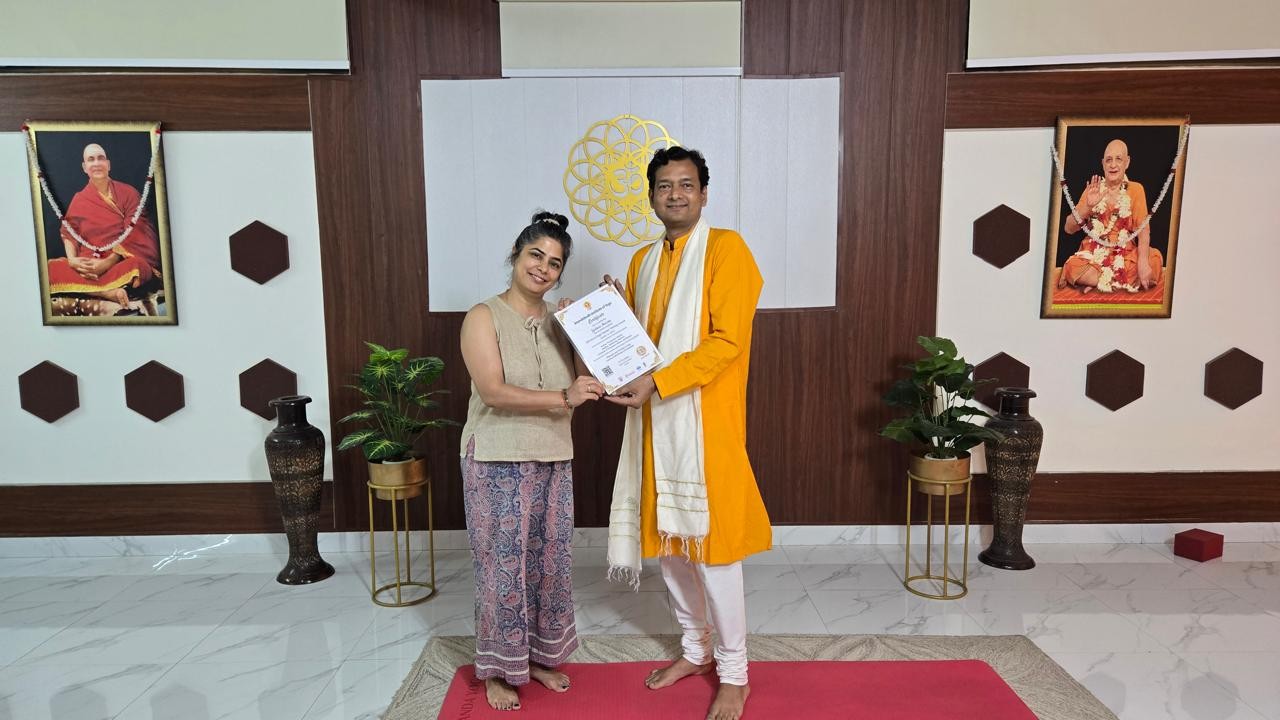
Jyotsana (Gurgaon)
I am Bhoomika Pathak .I have completed 200 hrs yoga teacher training course from Anandboadh Institute of Yoga, under the guidance of Shivachittam Sir. This is a unique course which follows the traditional yoga essence. The real knowledge of life is what I have learned during this course. We have learned so many techniques of asana, pranayama, mudra, bandha and shatkarma. Also, we have learned the deeper aspects of pranayama and their effect on our body and life. My perspective towards yoga has completely changed after enrolling into this course . We have 6 days practical classes. 3 days asana class and 3 days meditation class which is an optimum combination. Every asana class turns out to be a meditation session also as asanas are done with full awareness. Post every session I feel so energised, calm and healed .To compliment it, we had theory classes on weekends . The syllabus of TTC has been designed meticulously and covers all aspects of yoga , teaching methodology, and history. The historical aspects that we have covered in this course are incredible and to my view everyone should comprehend it. The knowledge i have gained through this course is priceless .The dedication of sir is commendable. He is so disciplined and knowledgeable person. He never misses any classes and similar discipline he expects from his students. The entire course completed wonderfully and it’s outcomes are amazing, as yoga helps you become best version of yourself . It helps you to encounter every phase of your life . I am thankful to Shivachittam Sir for his genuine efforts to spread yoga to everyone’s life in its true form and traditional way.
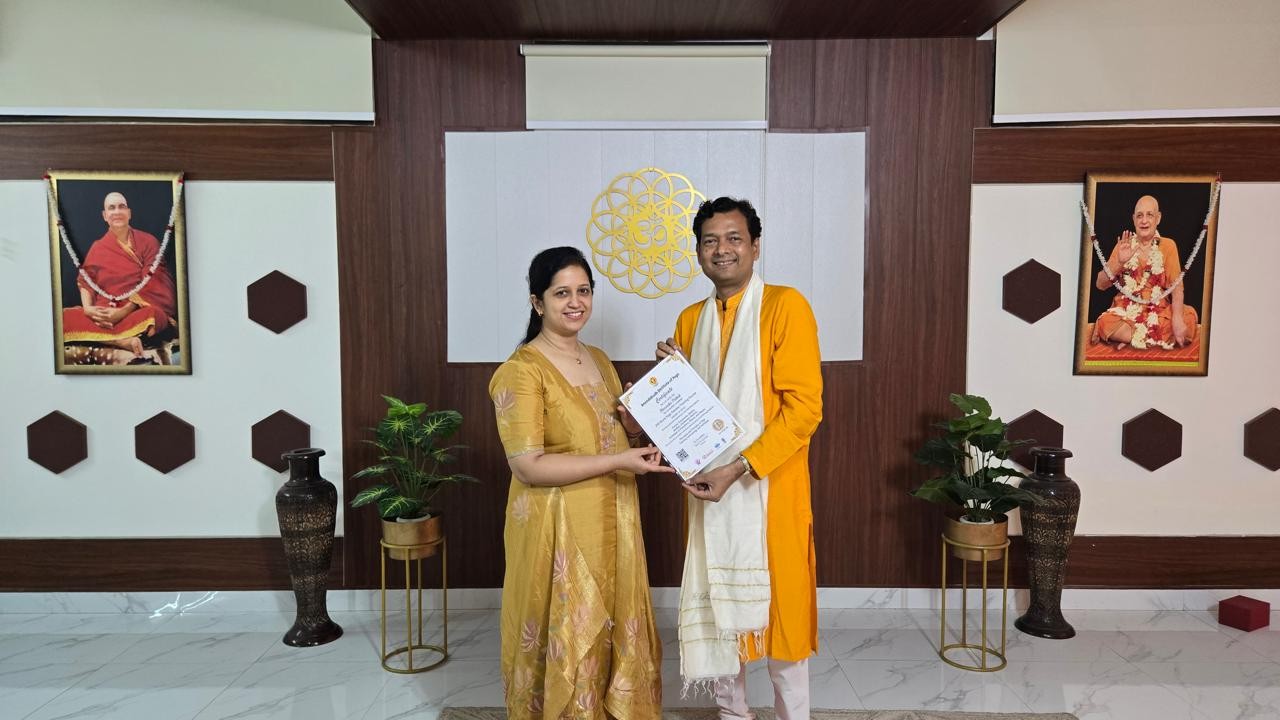
Bhoomika Pathak (Gurgaon)
I completed my 200 Hour Yoga TTC program under the guidance of Master Shivachittam recently. I would like to express my gratitude to sir for putting in so much effort for helping us understand the yoga history, philosophy and methodologies. Each class was a gem as he explained the various aspects of yoga. Coming from a background of energy healing, I had many experiences which i could not explain logically. With the help of Master Shivachittam and various study content from Satyanand tradition I could quench my thirst for knowledge. Through his disciplined way of teaching he also inspires to be the best in this field. If you are looking for genuine yoga knowledge then look no further because he is definitely the best. Hariom.
All the best.
Sandhya Sabharwal (Gurgaon)

Sandhya Sabharwal (Gurgaon)
The 200-hour Teacher Training Course is well-planned and detailed. I appreciated every theory topic we covered, as well as the practical classes. I have learned so much, gaining knowledge not just about yoga but also life-long learnings. This TTC course is very organized, holistic, and highly relevant to our current day-to-day lives. I highly recommend it to anyone seeking certification with authentic knowledge. Thank you so much, sir!
Renu Parihar (Gurgaon)

Renu Parihar (Gurgaon)
I recently completed the 200-hour Yoga Teacher Training Course at Anandabodh Institute of Yoga, and it was truly an incredible experience. Shivachittam Sir is deeply dedicated to teaching, and his extensive knowledge of yoga and related disciplines is remarkable.
Before joining the course, I had a limited understanding of yoga; to me, it was mostly about bending into certain postures or just another form of exercise. However, through this course, I’ve come to understand the true essence of yoga—its philosophy, depth, and how it extends far beyond the physical practice. This training has not only enhanced my knowledge but also transformed my perception of yoga as a holistic and lifelong practice.
I highly recommend this course to anyone serious about learning authentic yoga and deepening their understanding. The experience has been nothing short of life-changing.
Rashmi (Gurgaon)

Rashmi (Gurgaon)
I was beginner in Yoga, I have joined the 200hrs Yoga TTC Course for improving my understanding of Yoga and it's different techniques. I was also quite interested in the overview of the different tools used and how it's applied.
My expectations were met indeed. Both Shivachittam Sir and Rupesh Sir have quite a lot experience and discipline in terms of Yoga knowledge and understanding.
In terms of Yoga asana practices, different variety of asana's were included from intial to advance stages both by Rupesh Sir and Shivachittam sir. For the meditative practices, Shivachittam sir have quite a lot experience, and that is also reflected in the meditative classes, where his calm demeanour and clarity of instructions can be easily felt.
Now, in case of the theory classes, they were quite explicit and course content covers large amount of topics, various philosophical and practical topics were discussed during the theory classes, from history of yoga to its significance in today's life.
In terms of my personal growth, my flexibility and sitting capacity increased in large amount, my ability to relax and clear mind increase highly, while also learning multiple Mantras. I also learned a great deal amount of qualities and where I can improve further through continuous feedback from both teachers from time to time.
Overall the course is quite good in terms of its content and the teaching methods but everyone expectations might be different, so it might be not for everyone. From a beginner's perspective, theory and its practical implementation by both teachers were quite good.
Thank You

Vipin Malik (Gurgaon)
I did a 200 hour Yoga Teacher Training Program from Anandbodha Yoga. My aim of joining the course was to know more about yoga, in it's depth. I didn't know what more to expect.
We had daily sessions rotating alternately between yoga and meditation and extended theory sessions over weekend.
The best part was the course could be done remotely since I do not live in Gurugram.
I am glad I did this course and especially from Anandbodha because the aim of this institute is to make yoga grow and reach every person's life. It's not monetary or commercial. When a noble vision is attached to an initiative, it is bound to be good.
The very first lesson was that you are good wherever you are in your asanas. You do not need to exert too much and feel drained. The key is to be consistent. The way yoga asanas are practiced at Anandbodha is very unique. We practiced asanas for almost an entire hour without feeling drained. The dynamic movements coupled with quick relaxation are quite energizing. You look forward towards next class rather than dreading it.
We not only practiced complete yoga including asanas, pranayamas, mudras, bandhas, yoga nidra, meditation including Antar Mouna and Ajapa Japa, Om Chanting, Maha Mrityunjaya Mantra Chanting but also learnt about all these in details which gives one an insight on what happens when something is performed and empowering you with the ability to frame something exclusively for yourself.
Never knew Yoga has so many components and doing them in several combinations interchangeably never made yoga monotonous.
We also learnt Shatkarma practices including Jal Neti, Kunjal, Shankhprakshalan, Tratak. They sound hard but are not. You only need to practice once. Knowing the techniques and benefits you can help yourself and others in management of various ailments.
We gradually learnt an ideal routine to follow including early sleeping, starting day with mantra chanting, nasyam, oil pulling, sleeping with a quick review of the day. We also learnt about Diet and Nutrition. It might take a little while to get used to it all but you definitely see the difference once you are able to incorporate this in your lifestyle.
The teachings are very extensive, teachers at Anadbodha are very knowledgeable and working for a greater cause. Class timings might fell short but you can't get enough of teachings they incorporate in every class.
I have lot of gratitude for Shivachittam Sir and Rupesh Sir for hosting this great platform where one can learn 'How to Live'. I would recommend this course from Anandbodha to everyone whether one wants to become a yoga teacher or not. We have the potential to achieve so much only if we know how to manage ourselves. This course in my opinion is bound to bring the best in oneself in any field one might be working.
We learn how to manage ourselves very well with this course. We should get this training from childhood but it's never too late. It is fun and not at all boring as it might appear. Within this 4 months period we can intent and aim to be a better version of ourselves. The results vary based on intention, efforts and consistency but results are for sure.
Amaze yourself and Inspire Others with this journey.

Richa Jain, Meerut (U.P.)
I have completed my 200 hours Yoga TTC course from Anandbodh yoga Institute.This course is absolutely amazing, completed in 4 months. The syllabus is designed by knowledgeable and experienced teachers of the Institute.
My life has been fully changed after completing this yoga course. This course influenced my personality on physical, mental, emotional and spiritual level. It is holistic course of yoga .
We can complete this course by offline or online. I have taken online classes for the first time in my life and I have found similar attention on both offline and online mode. We can complete this course from any part of the country or the world.
Teachers are very knowledgeable and experienced. They know the right method of teaching. Each and every concept got cleared by giving examples. I am fully impressed by their teaching methods. There are regular classes which makes our body flexible and active. Meditation is very important part of this syllabus which works on our mind. If mind will healthy and fit then whole body will be functioning properly. It also open and activate psychic channels in our body. Many practices like Shankhprakchhal-an, Jalneti and Kunjal seems very tough but all these practices done very easily because instructions are very clear.
I am feeling very excited because I am working with more knowledge. Right knowledge makes us more aware to do the work.
I am highly thankful to Shivchittam sir and Rupesh sir. Both works with great effort to completing this course. I have practiced holistic yoga which includes Asanas, Pranayam, Mudras,Bandhas, Shatkarma, Relaxation and meditation.
During this course whole day I feel very energetic and active. Mantra chanting is also very important part of this course which is very effective on our mind.
I will suggest everyone to do yoga course from Anandbodh Institute to become knowledgeable yoga teacher. Right knowledge devlope our confidence and personality also. I am hesitating to talk in group but after completing this course all hesitation gone away. Today I am speaking with great confidence.
Thank you

Vibha Ojha (Delhi)
I count myself blessed that I did my Meditation Teacher Training Course from Anandabodh Yoga School. Shivachittam Sir is truly the fountain of knowledge and bliss and every class with him was fascinating and full of value. We learnt the practice and theory of Meditation in the style of prestigious Bihar Yoga/Satyananda Yoga tradition. Personally, I feel more connected to my inner self and to everything around me. Before enrolling in this course, I used to practice meditation as a way to relax myself, to calm myself and feel happy in general. This course made me aware of the truly transforming abilities that Meditation has, how it helps us to connect to our higher power and access the wisdom and strength of this higher power to guide us through life. Yoga and Meditation are indeed a way of life and I had read about this before countless times, this course gave me tools and insights to fully embrace this lifestyle. Right from the moment I wake up to the moment I sleep, and beyond that as well. As a teacher, I feel more confident because of the vast knowledge imparted to me in a very structured and organised way. The course covered the very basic aspect of Meditation to the very advance one. As Meditation Teachers, it is our responsibility to give students what they come seeking - be it Mental peace, improving their focus, overcoming social anxiety, and so on. This course will help you deliver on that. Thank you.

Shraddha Deepak (Gurgaon)
Hari OM
My meditation teacher training course was an incredible and enriching journey.
Shivchintan Sir is a veritable fountain of knowledge. All the lessons and exercises taught by him such as Pranayam, the Chakra studies, Yog Mudra, Antarmaun, Ajapajap, Bandh and other Mudras were explained in minute detail and immense clarity.
He makes the difficult to grasp concepts clear with his detailed reasoning and demonstrations with utmost patience and a rare gift of vision.
I have been practicing Yoga for over 10 years but the past three months have been a unique experience for me due to the teachings imparted by him.
The ability to feel light as well as attaining and maintaining a state of 'Sam bhav' - equanimity in adverse circumstances comes with great toil and determination.
He has however, made me feel fairly adept at entering and remaining in that extraordinary, rewarding state.
I shall forever be grateful and indebted to him for allowing me this great honour and an opportunity to learn under his tutelage.

Anjali Aggarwal (Delhi)
Shivachittam ji, is an excellent teacher in all respects. His words speak of his depth of knowledge and his commitment to the field of Yoga. I did not had to doubt or double check any of his words as inside me I felt he cannot be wrong. It appears to me he lives and breathes yoga which is very evident in his way of teaching and sharing his knowledge. It is very rare that good teachers in the field of yoga are also willing to share their knowledge and experience.
Meditation TTC was a very good experience for me to get an in-depth idea of the meditation techniques and their purposes. In the course we not only touched upon meditation but also pranayama and Bandhas as it contributes significantly to meditation. The course covers practical as well theory lessons. Candidates also conduct meditation sessions without any written script in front of them, which is very helpful and I gained a lot of confidence in my speech and delivery of meditation classes. All in all it was a deep learning experience for me as we touched upon many topics, did in-depth study of chakras. Class session also involve sharing our experiences in meditation which was important to understand the journey forward. A big ThankYou for Shivachittam ji for time and commitment in sharing his knowledge and experience with his students.

Neha Doorwar (London, UK)
| I have been learning and practising yoga, specifically the therapeutic, gentle, Bihar School of Yoga, under Master Shivachittam since my early 30s. Now 54, a mother of 5, I can truly say it is his gentle guidance, his wisdom, and his deep understanding of the body, mind and the psyche that has set me free. Now a poet, writer and activist and always a part time yoga teacher ( I undertook the Yoga teacher training under him), I teach Menopause Yoga, and other forms of therapeutic yoga in one on one or group settings. I can thoroughly vouch for his knowledge and style of teaching; I embraced yoga and yoga embraced me back, and has set me free to create, live in joy and bliss, and I would urge you to experience his classes and teacher trainings too! |

Jhilmil Breckenridge (GOA)
Hari om
Good morning everyone!
Today I am going to share about my Yoga journey. Recently I have completed my Yoga TTC from Anandabodh Institute of Yoga, Gurugram. The founder of the institute is Mr. Shivachittam Sir. He is a very experienced and professional Yoga Teacher. He is a great personality and a true passion for teaching and inspire others. They empower students with an amazing positive attitude. They follow the prestigious Bihar School of Yoga tradition in their teachings. It is a Holistic-integrated school of Yoga.
I learnt Yoga in its wholesome form, not only some Asanas and Pranayama, but a lot of other components of yoga, it's truly a self realization for me. It has totally change my life. I gained a beautiful harmony between head, heart and hand through the practices we learnt during the course.
It's a very amazing journey and a greatful experience with Sir. This is not just a course but it teaches us to be self dependent and how to present ourselves in the professional journey of yoga.
Anandabodh Institute of Yoga has a top class facility related to yoga.
If any of you want to do the teacher training course then this is a highly recommended place to start your yoga journey!

Suman Sharma (Gurgaon)
I did the 200 hours Yoga TTC at Anandabodh, and to say the least, it was a transformative experience. Coming from a corporate background and having done yoga only at gym, I started with a very limited understanding of yoga. What followed were 4 months of understanding yoga in its entirety, consistent practice and finishing with a holistic perspective. At the end of the course, not only did my understanding evolve to a different level but also, there was an upliftment in my lifestyle. All credits to the wonderful teacher who facilitated the training so well. Shivachittam sir is the best person in the field to learn from. His knowledge and wisdom shone throughout the course. I am grateful that I could get guidance from him so early on in my yoga journey.

Charu (Gurgaon)
My experience of the Teacher Training Course with Anandabodh
I was always keen on learning yoga in its purist form. I had followed a certain Yoga group for over ten years and I thought I knew quite a bit. I had even taken Sessions in the past but I knew my knowledge was haphazard and limited.
I feel so blessed to have found Anandabodh school and Shivachitam as the teacher. I came and asked 100s of questions before starting as I was so skeptical about who I will invest my time and money with!
I started after being convinced that I’ve met the right teacher. As the classes began , I started to learn about Yoga as it is! It was beautiful to learn from someone who has profound knowledge of the subject and has been trained from the best insititude.
I’m grateful for what all I’ve learned and I cannot wait to pass my new found learnings with the world.
Highly recommend it to anyone who wants to learn from the best!

Sonia Sharma
Video Testimonial
Stories of transformation.
Real stories from students whose lives changed through consistent practice, awareness and the Anandabodh way of living.
View all testimonials ↗A journey towards better wellbeing
Finding balance through consistent practice
From practice to transformation
Our Distinguished Students
Leaders, athletes and professionals who walk this path with us.

Mr. P Shankar
Ex-Chief Vigilance Commissioner, India

Mr. MS Ramchandran
Ex-Chairman, Indian Oil Corporation

Sardar Milkha Singh
Sports Personnel

Mr. Jeev Milkha Singh
Top Professional Golfer of India

Sardar Rajinder Singh Bhatti
Former DG, CISF & Former DGP, Bihar Police
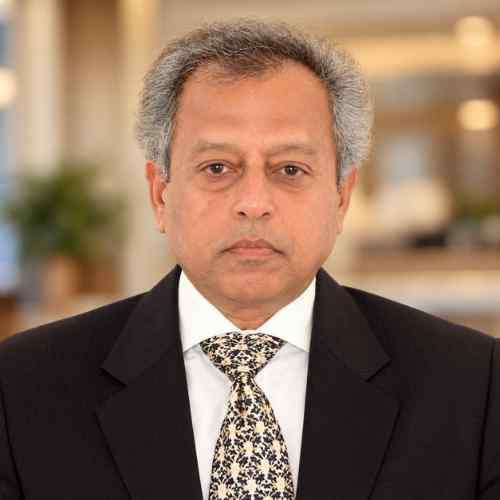
Mr. Anil Bhalla
Founder & Chairman, Vatika Group

Mr. Sri Rajan
Ex-Chairman, Bain & Company India

Actress Sonam Kapoor
In the Movie Aisha

Ms. Lakshmi Singh Puri
Former Assistant Secretary-General, United Nations

Mr. C. K. Birla
Chairman, C. K. Birla Group
Mr. Manish Upadhyay
Managing Director & Head of Growth - BFSI , UKI at NTT DATA, Inc.
Brands we have empowered





Ready to take the next step in your yoga journey?
Deepen your practice, expand your understanding, and take your next step towards becoming a confident and conscious teacher.
Enquire Now
Have a question or want to know more? Send us your details and our team will get in touch with you.